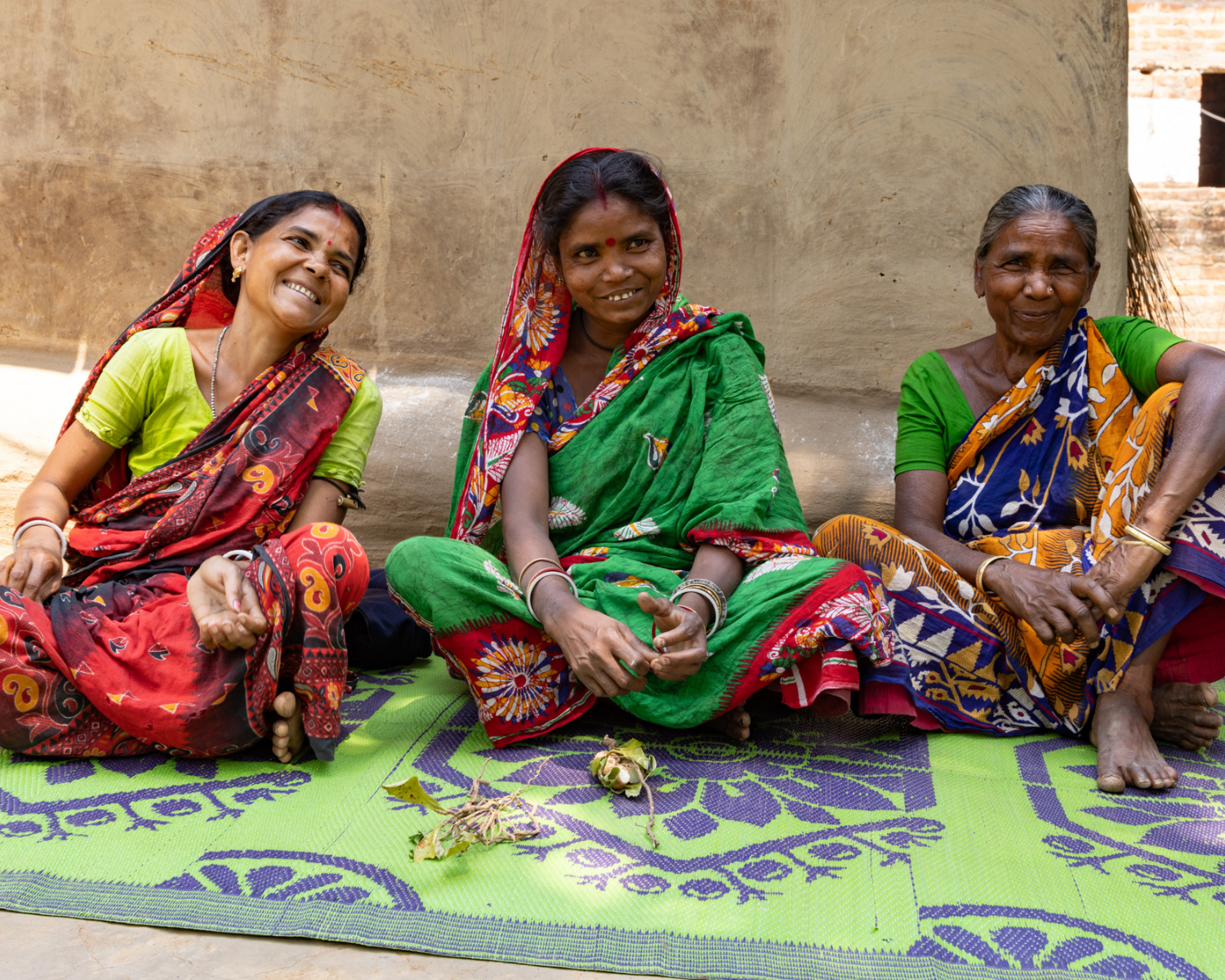
There’s a moment in many development conversations where poverty becomes reduced to numbers: income levels, assets, consumption, or livelihoods. But sitting with women across remote villages during this study, another reality kept surfacing quietly and repeatedly.
Before poverty takes away opportunity, it often takes away the permission to dream. Not suddenly but gradually.
A girl leaves school because she does not have proper clothes, while other children do. Another is married before she can even think about what she wants from life. A woman spends years moving between forests, farms, and brick kilns, surviving one season at a time. Somewhere between caregiving, debt, migration, hunger, and silence, aspiration itself begins to shrink.
And when these women are finally asked, “What do you want?” many do not answer immediately. The question itself feels unfamiliar. Some women paused for long periods. Some laughed in hesitation. Some initially said they had never thought about it. But slowly, aspirations emerged that were grounded, practical, deeply emotional, and shaped by years of lived experience.
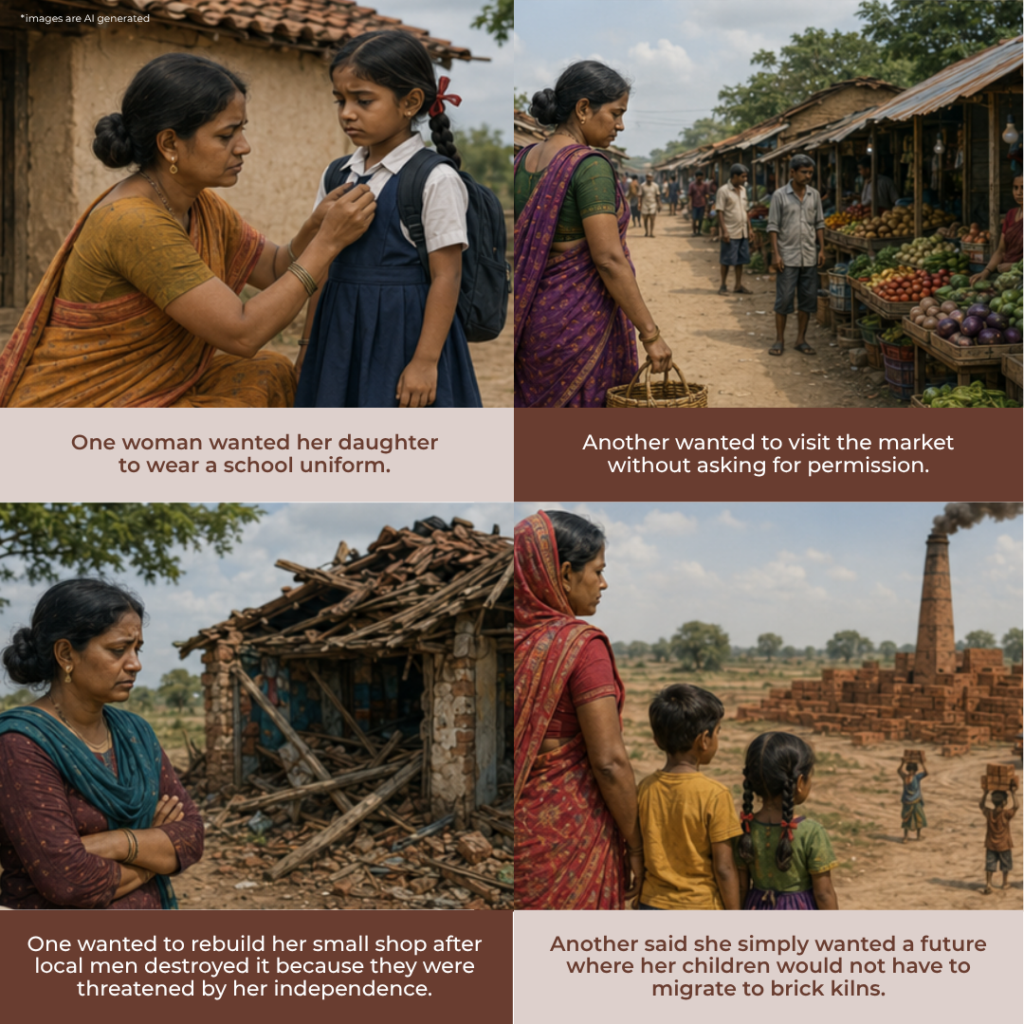
These are not “small dreams.” They are expressions of dignity, visibility, safety, and self-worth in contexts where women are often expected to adjust quietly to whatever life gives them.
The findings from our recent study, “Becoming Someone: Can aspirations shape economic empowerment for rural women?” reveal that aspiration is not simply an individual trait or personality characteristic. It is deeply social. It is shaped by what women have seen, what they have been allowed to imagine, and whether their environment gives them space to hope for something more.
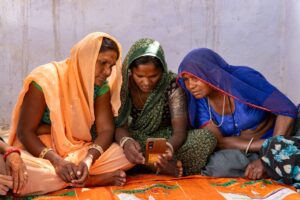
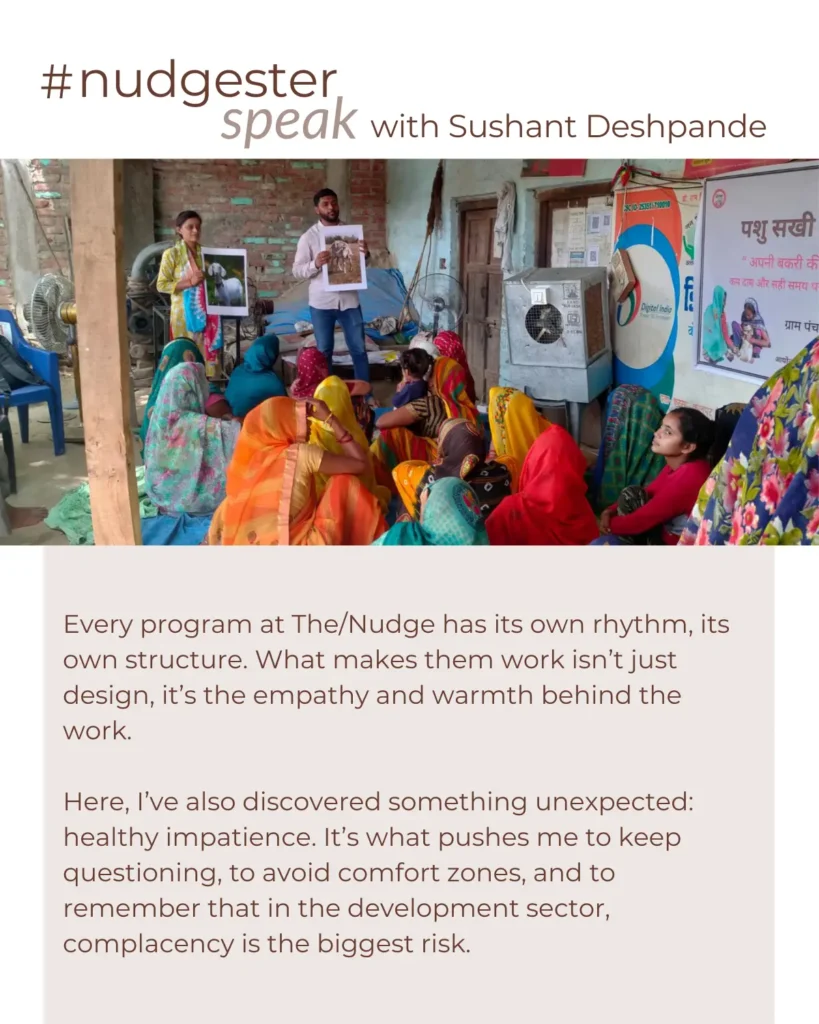
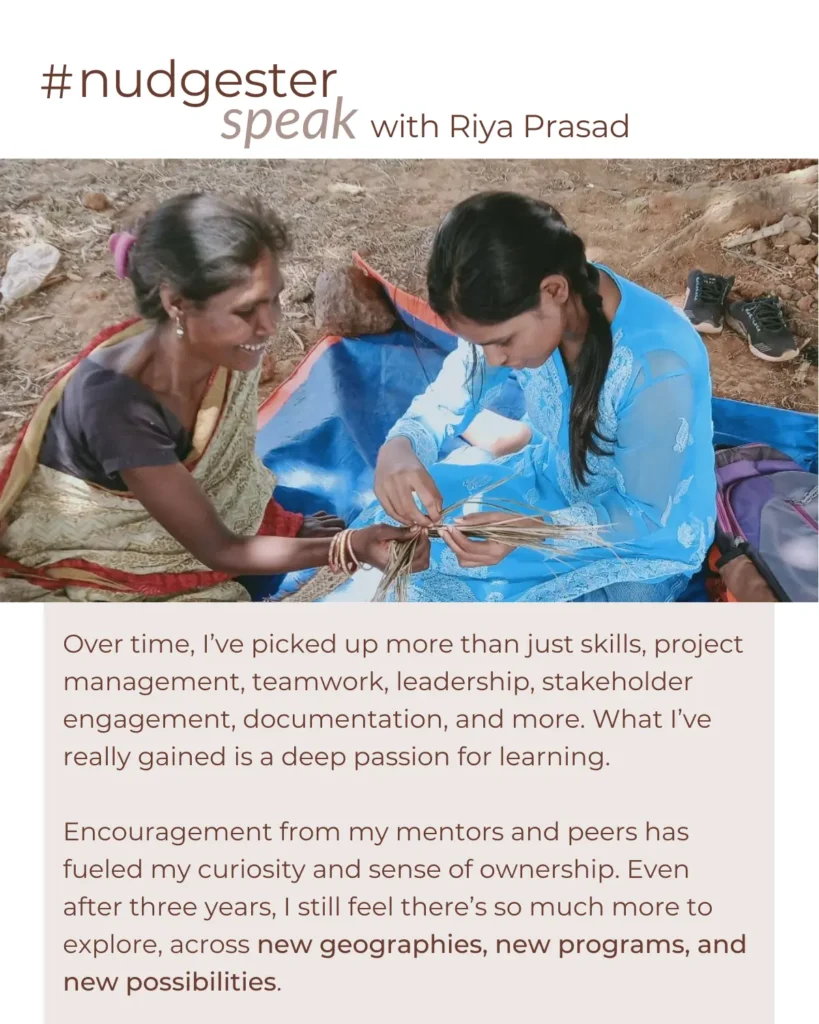
Again and again, women described how aspirations expanded after exposure to collective spaces, peer learning, or small livelihood opportunities. Sometimes the turning point was not a large intervention, but a meeting. A woman sees another woman speak confidently in a self-help group. A visit outside the village. A conversation where someone says, “You can also do this.”
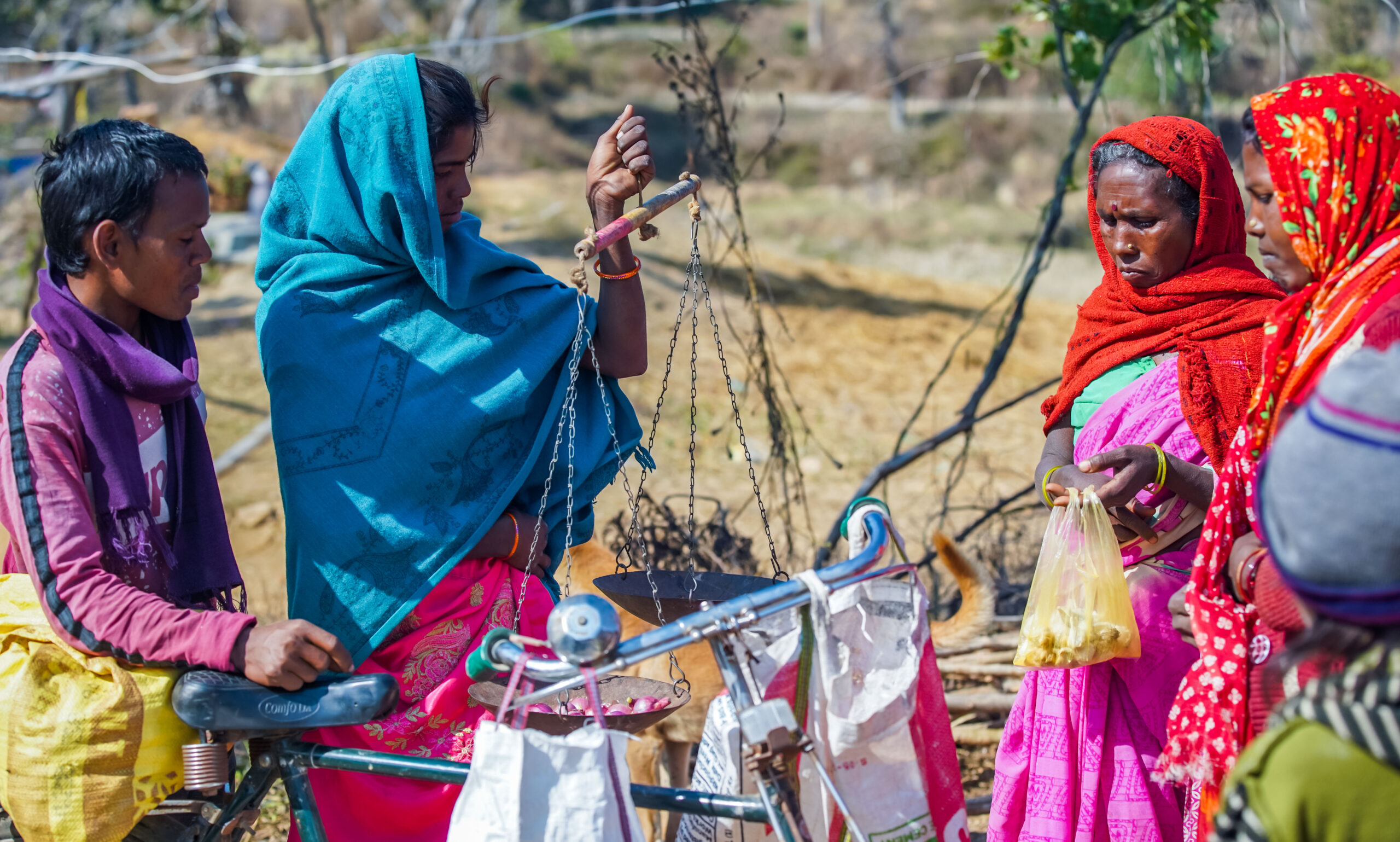
For some women, the first asset they ever truly owned was a goat. Not inherited land. Not savings. A goat. But the significance of that goat was never only economic. It represented contribution, bargaining power, stability, and sometimes even emotional companionship. One participant described how caring for goats made her feel less alone when her husband migrated for work. Another sold goats to open a small shop, proudly explaining that she now had “two sources of income.”
These stories challenge how we often think about economic inclusion. Livelihoods are not only about income generation. They are also about identity, visibility, and agency.
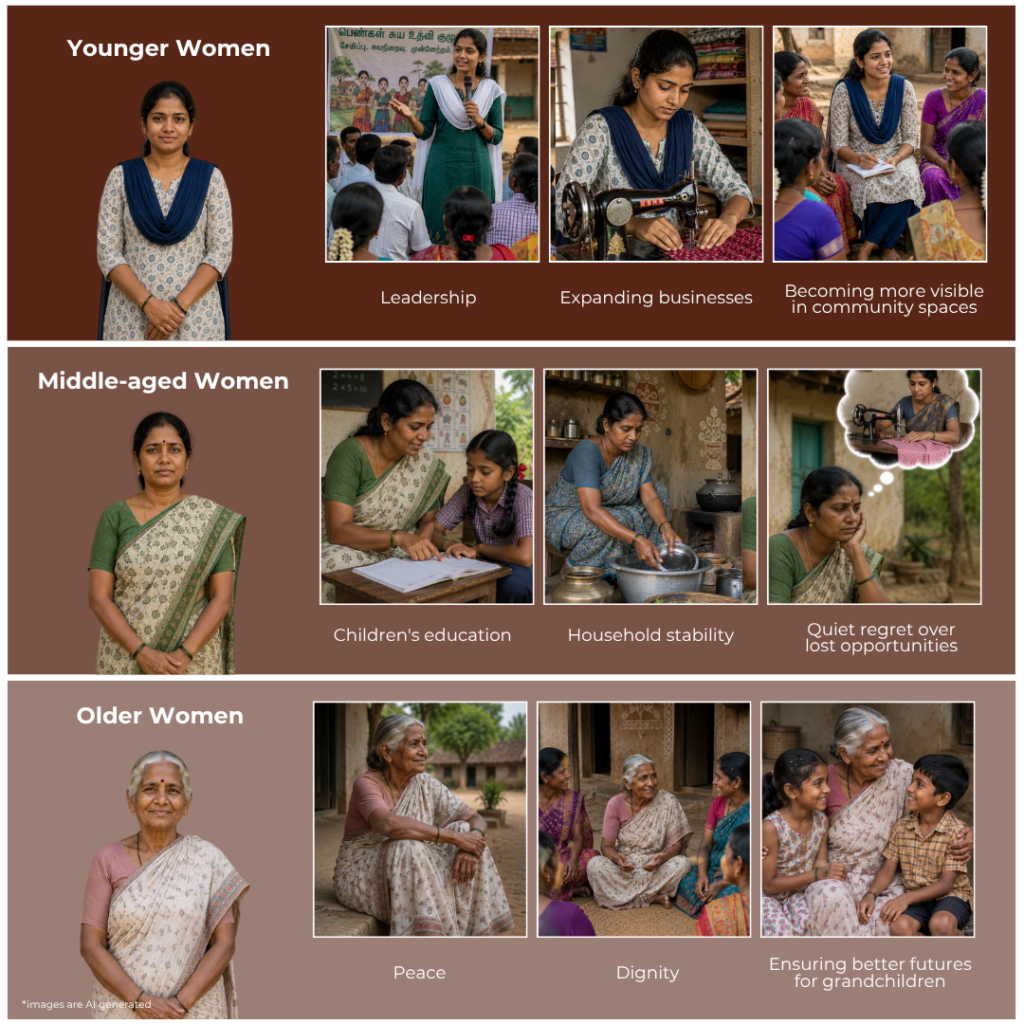
The study also revealed how aspirations evolve across the life course. What remained constant across generations was the emotional weight attached to education. Many women who had left school early now saw education as the bridge between their children and a different life. One woman remembered leaving school after Class 2 because other children had better clothes and she felt ashamed. Another said she could never think about studying because arranging food itself was difficult. Today, these same women are saving money, taking loans, and considering hostels so their children can continue schooling. In many ways, their aspirations have not disappeared. They have been transferred.
At the same time, the study reminds us that aspirations do not grow in isolation from structural realities. Women continued to face severe constraints: geographic remoteness, domestic violence, early marriage, low literacy, health shocks, fragile livelihoods, and limited mobility. For some, even imagining a different future felt risky or unrealistic. This is perhaps one of the most important insights from the research; aspiration itself can be shaped and suppressed by inequality. If someone grows up rarely seeing women exercise agency, own assets, travel independently, or participate in decisions, the boundaries of possibility become narrow; long before economic interventions begin.
And yet, many women in this study are still imagining more than survival. Not necessarily dramatic transformation, but something equally important like a stable livelihood, education for children, a life without distress migration, the confidence to speak in meetings, the ability to contribute to household decisions, the freedom to wear red lipstick and the dignity of being recognised as someone whose voice matters.
One participant reflected, “I realized I can do something while sitting in the small group.” That sentence captures something development frameworks often struggle to measure. Economic empowerment is not only about increasing income. It is also about expanding a person’s sense of what is possible for themselves. And that expansion is deeply relational. It grows through recognition, exposure, collective spaces, encouragement, and the gradual rebuilding of confidence.
The women in this study are not simply aspiring for “more.” They are negotiating what it means to become visible in worlds that have historically expected them to remain invisible. Maybe aspiration begins when someone starts believing that their future can look different from their past.