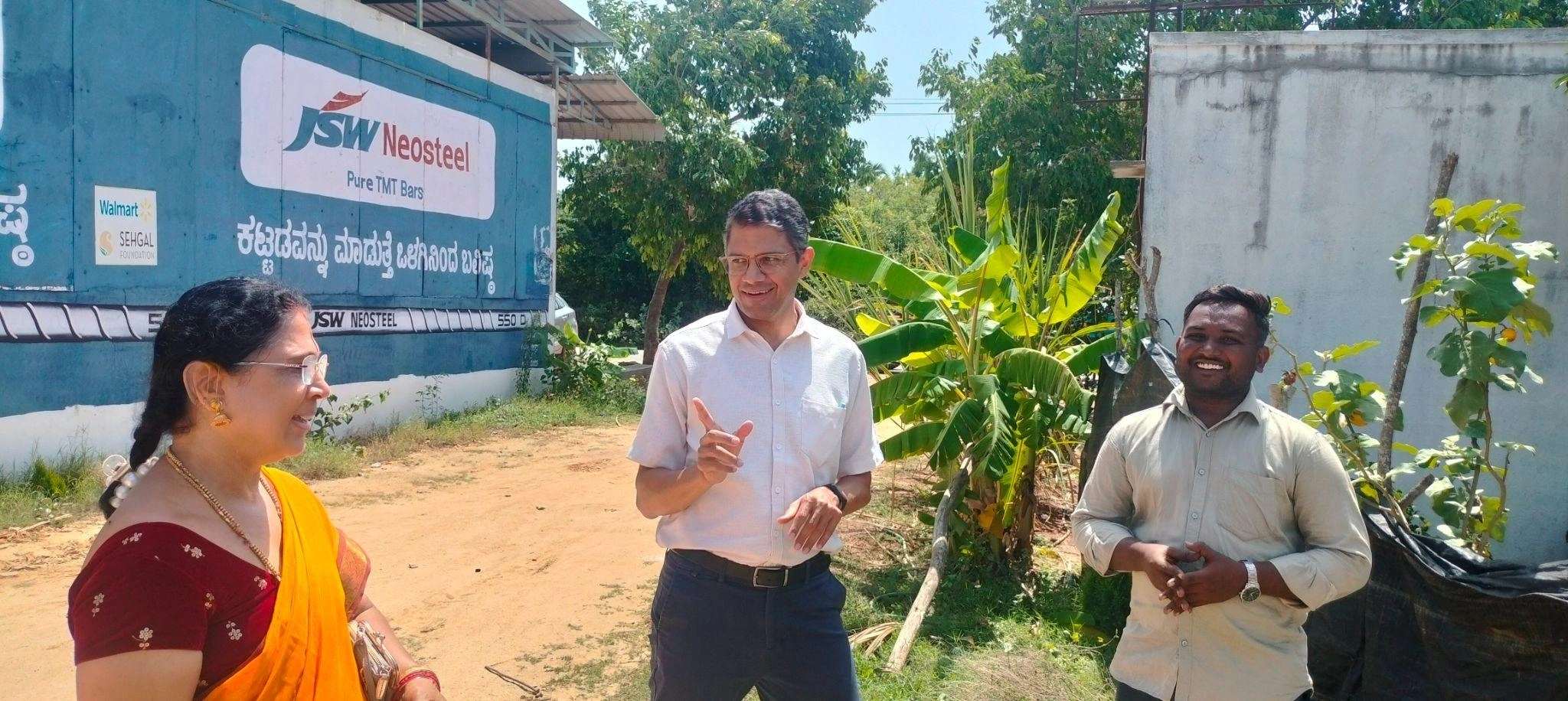
I describe myself in three words: Curious, Collaborative, and Storyteller.
Curious because I view myself as a continuous learner, always keen to know more about topics that catch my fancy, across science and technology, sport, society, and nature. Collaborative because I believe the whole is greater than the sum of its parts, and I work towards finding common ground across stakeholders. And a storyteller, because I view storytelling as an effective means to engage in productive conversation.
Before the Indian Administrative Fellowship (IAF), I was a marketing leader in fintech business verticals across Amazon India and the Tata Group, going to work every day to solve customers’ financial and payment needs across a portfolio of products and services. I had set a personal milestone to step out of the corporate track and explore a more intellectually stimulating path with social impact.
I came across the IAF through a series of conversations at The/Nudge. The prospect of working with the agriculture department, a field I had a keen interest in since my graduate studies, excited me deeply. Having also witnessed the social impact of my father’s civil service career, the IAF appeared to be the right blend of social impact and thought leadership I was looking for.
The assumption I got wrong before day one
The positioning of the fellowship around “Indian Administration” and the selection process of being interviewed by IAS officers built the perception that a Fellow would primarily be working with the IAS cadre and that the expected output would be strategic recommendations. A few weeks in, I realized a Fellow is equally expected to deliver tactical and execution recommendations, a shift that ultimately made the work more grounded and impactful.
Why Karnataka? Why now? Why this?
My connection to Karnataka through the IAF was two-fold.
Professionally, having completed my graduation in Agricultural Sciences at UAS, GKVK Bangalore, this stint offered me the chance to upgrade and leverage my technical knowledge and contribute back to the state.
Personally, I look up to my father’s reputation for discipline and professional integrity and the wide social impact of his civil service career. The IAF stint offered me the opportunity to walk the same path, albeit on a much smaller scale.
Learning the language of the government
The risk-reward logic of the government
One of the most important reframings I had to make was understanding how government systems assess risk. Rather than pursuing high-upside innovations that carry any risk of disruption, government systems tend to favour what I’d call a “+1” approach, building on existing processes rather than disrupting them altogether, ensuring no negative impact on public delivery even when outcomes are uncertain.
Once I understood this, I stopped pushing against it and started designing recommendations that worked within this logic.
The unwritten rules
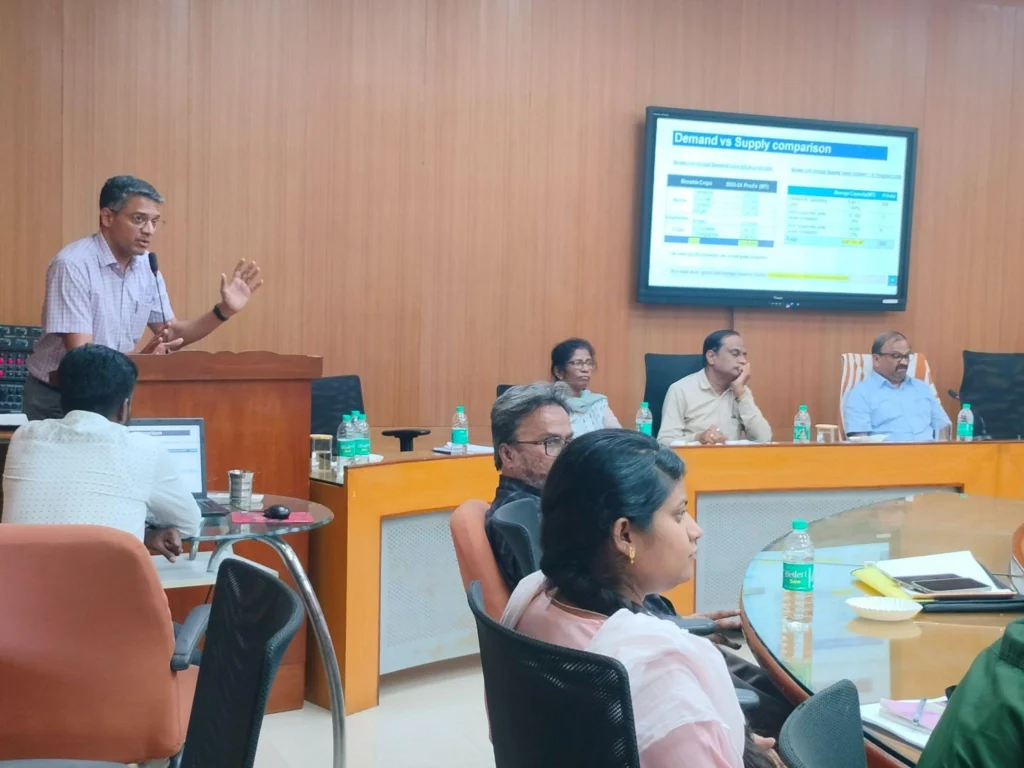
A senior government official once told me: “Following protocol is 50% of engaging effectively in government.” Standing up when a senior officer arrives, seating arrangements based on departmental hierarchy, waiting for your turn to speak. These spoken and unspoken rules, when followed, earn trust and respect in ways that no MBA curriculum prepares you for.
Another insight that stayed with me came from conversations around Public-Private Partnership proposals: the government’s role should be limited to defining the rules of engagement that optimize for social impact and selecting the most capable and qualified private partner.
The value of on-ground feedback
In my project with the Horticulture department to facilitate inter-state trade of fruits and vegetables, we conducted a buyer-seller-banker meet to directly connect FPOs producing chilli and ginger with corporate buyers. While all three parties enthusiastically committed to doing business in the meeting in Bengaluru, field visits later revealed a different picture.
FPOs had not conducted quality assessments of their produce, and taluk-level bank managers were unaware of credit schemes available to FPOs. These ground-level gaps are exactly what revised recommendations had to address.
EQ over IQ
In the early days of the fellowship, Vivek Sharma, Head of the IAF program, said something that stayed with me:
“In IAF, EQ i.e. emotional quotient is more effective than IQ i.e. intelligence quotient” and “simple and practical demonstrations will be appreciated more than intelligent recommendations.”
These two lines have guided how I manage my emotions and how I frame my work.
Nine projects. One common thread.
My mandate spanned two departments and nine projects, but a single thread ran across all of them: closing the gap between what farmers produce and what they earn from it.
Horticulture department
- Increasing inter-state trade of select fruit crops: Karnataka leads in horticulture area across India, ranks 7th in production, and is a horticulture surplus state. Significant price arbitrage exists between local Karnataka markets and other states, but FPOs and farmers are unable to capture this due to lack of credible buyer contacts and short-term credit. This project develops an integrated approach to strengthen inter-state trade linkages for FPOs.
- Reducing food loss: Grand challenge: As per NABCON’s 2022 report, an estimated 10-20% food loss occurs across farm and market operations. The CS office commissioned a Grand Challenge, led by horticulture as the nodal department, to identify food loss prevention solutions from startups, funded by private sponsors and deployed through FPOs.
- Online dashboard for horticulture assets: Karnataka has 400+ farms, 13 parks, and 2 hill stations statewide. This project developed a real-time dashboard showing farm area, nursery status, and planting materials by location, providing transparency and centralised tracking of budget utilisation and revenue.
- “Coffees of Karnataka” branding: To promote pure coffee from Karnataka, similar to “Araku Coffee” from Andhra Pradesh, a dedicated brand “Coffees of Karnataka” with the tagline “Blend of Heritage and Taste” was developed for launch from the CS office, for the benefit of small growers across key coffee-growing districts.
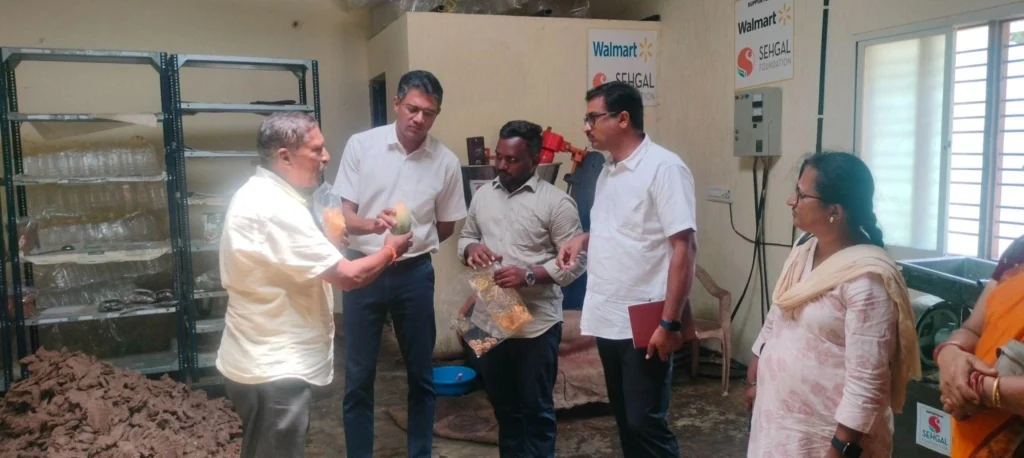
- Fruit & vegetable processing units in CEPMIZ districts: The four districts of Ballari, Vijayanagara, Chitradurga, and Tumkur are major producers of mango, banana, red chilli, tomato, and onion. Setting up F&V processing centres through CEPMIZ funds aims to reduce crop waste and increase farmer incomes.
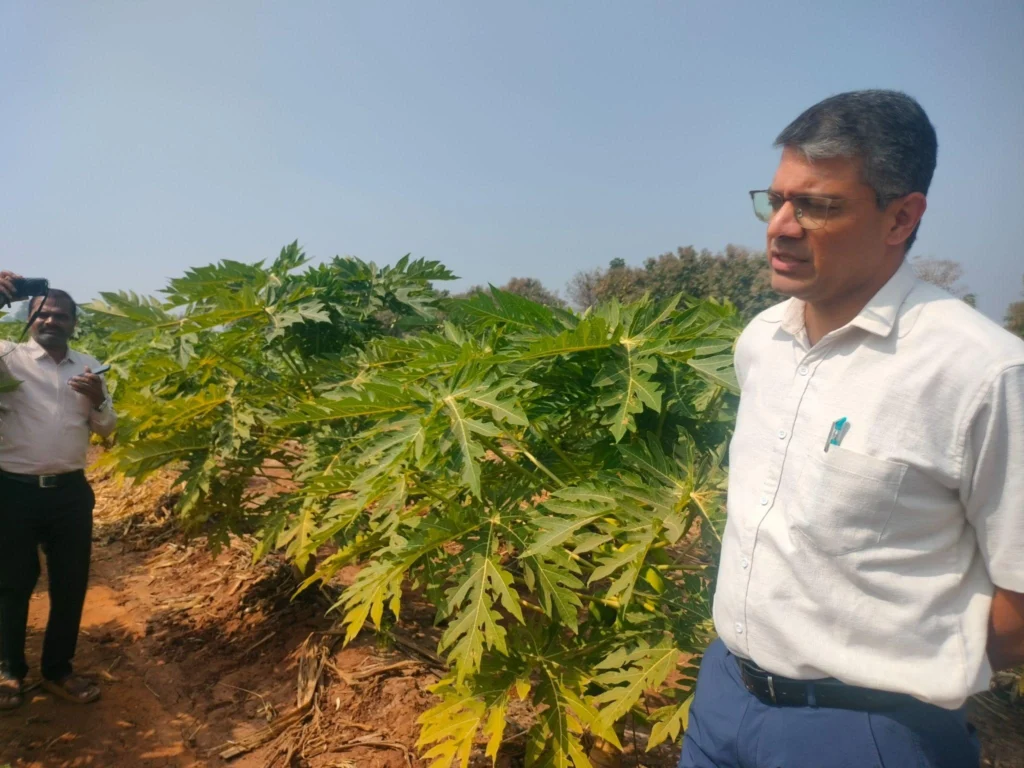
- Five-year plan to increase crop productivity: Karnataka has the 3rd largest area under horticulture but lags in productivity across major crops. The five-year plan charts interventions to bridge this productivity gap across five selected crops in Phase 1.
Agriculture department
- Improving MOU conversion at buyer-seller meets: The Department of Agriculture organises several buyer-seller meets to enhance market linkages, but there is no data on the conversion rate of LOIs to actual business. Using ITF’25 (Organics & Millets) as a case study, this project analysed the end-to-end flow to build capacity for improving conversion rates.
- Branding & marketing toolkit for FPOs: The Department of Agriculture’s Raitha Samruddhi Yojane (RSY) includes Rs.5L per FPO for marketing and branding, but uptake and impact remained lower than expected. This project created a ready-to-use marketing toolkit to help FPOs effectively utilise these funds.
- BharatVistaar launch in Karnataka: BharatVistaar, the AI-enabled Digital Public Infrastructure for agriculture, was formally launched on 17 February 2026. Designed as a unified digital platform, it enables farmers to access agricultural schemes, ICAR packages of practices, pest advisories, IMD weather forecasts, mandi prices, and grievance redressal. I supported its Karnataka launch in partnership with the Department of Agriculture and EkStep Foundation.
Two moments that made it real
Among all my workstreams, two gave me the greatest professional satisfaction:
The ITF’26 branding pavilion
At the marquee India Trade Fair, we tweaked the standard stall format to include a live, instant branding and packaging demo for farmers and FPOs, something that had never been done at such an event before. The result: 17 FPOs signed up on the spot for RSY scheme support. The enthusiastic response from farmers, officials, and politicians alike validated the power of experiential engagement over conventional awareness campaigns. This was a direct application of private sector thinking, designing for outcomes, not footfalls.
The price forecasting initiative
This began as an ancillary project with no funding approval. Through a reference from an IAF ’21 Fellow, I engaged the IISc CSA Lab to develop a price forecasting solution for tomato crops. The prototype created by their team has since been selected to be announced as part of the 100 day development plans of the new Karnataka cabinet, an outcome I could not have anticipated when the project began.
When private meets public: What happens next?
The Indian Administrative Fellowship is built on the belief that private sector talent and public sector institutions can bring out the best in each other. My clearest example of this was the ITF ’26 pavilion planning.
By focusing on outcome delivery for farmers and FPOs, rather than simply attracting footfall as an output measure, I was able to get packaging and branding agencies to co-design the stall experience at no charge, because the outcome-oriented framing made sense to them. The farmers and department officials experienced something genuinely new. That could only have happened at the intersection of both worlds.
The leadership lessons no MBA teaches
- Patience: The private sector operates in quarters; the public sector operates in three-year plans. Calibrate your expectations accordingly.
- Influence: “Do first, advise later.” Seek buy-in from juniors before presenting to higher-ups. Never say no to any assignment, however trivial it appears. These strategies have expanded my scope of influence within the department more than any strategic recommendation ever could.
- Diplomacy: Direct feedback in group settings rarely lands well. The same feedback in a one-on-one setting has a far higher probability of being received favourably.
If I could change one thing
Policy convergence: Interdepartmental silos mean that the same communities are served by multiple departments with no coordination, leading to inefficient resource utilisation. For example, NRLM supports SHG training while Horticulture supports FPOs with F&V processing infrastructure. Because neither department coordinates with the other, SHGs cannot access processing infrastructure and FPOs cannot access labour to operate processing units.
Ease of doing business: States must benchmark their ease of doing business against peers, identify process delays and regulatory constraints, and address them systematically to convert private investment interest into actual on-ground investments.
What 18 months inside the government did to me
My IAF experience has been deeply fulfilling, in the exposure to the scale of the government’s potential to impact livelihoods, in the access to research, startup, and processing ecosystems, and in the recognition received for my book Fields of Purpose, a passion project I pursued alongside the fellowship.
The overall experience has deepened my wto pursue my next professional chapter in the agri-consulting sector, focused on enhancing rural livelihoods.
Eighteen months inside government gives you a perspective that very few private sector professionals ever get. I leave with a deeper appreciation for the complexity, the scale, and the quiet, unglamorous work that goes into public service, and with a conviction that the intersection of private sector rigour and public sector reach is where some of India’s most important problems will be solved.