
As India’s digital economy expands, organisations across diverse sectors are experimenting with new work models that can bring women into meaningful, flexible, and dignified employment. The first article in this series explored what women themselves want from digital work. In this next phase of learning, the Digital Naukri Challenge (DNC) focuses on the other side of the equation: how organisations can build stable and sustainable demand for this work.
During the Viability Phase, 11 Challengers tested digital, phygital, and physical work models across BPO, agriculture, rural health, jobtech & skilling, and data & AI solutions. Through field visits and partner discussions, as well as conversations with industry experts, a set of demand-related challenges began to surface. These challenges shape whether women can access consistent work and predictable incomes.
This article shares those insights that highlight the patterns and opportunities emerging from this exploration.
Unpredictable demand: A shared challenge across sectors
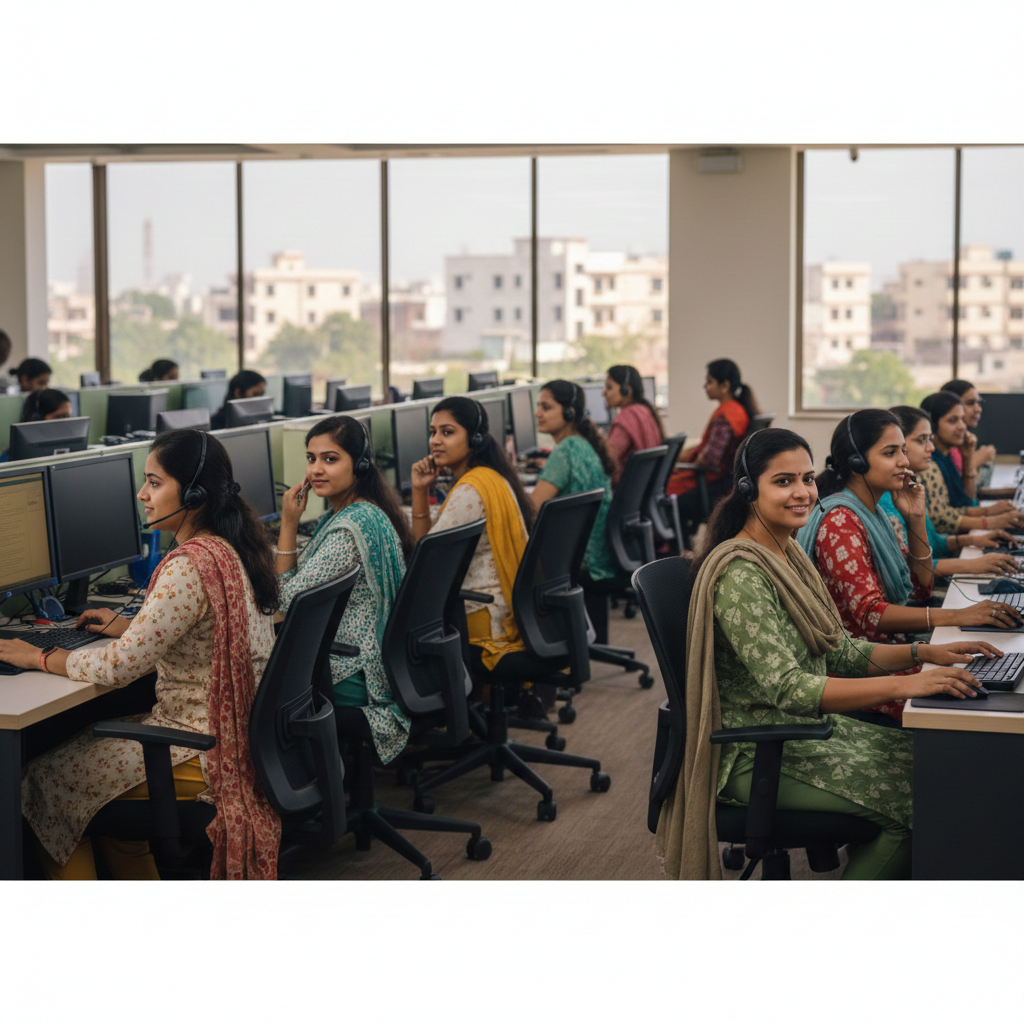
One of the clearest patterns observed across DNC Challengers was the inconsistency of work volume. In BPO services, for example, the availability of tasks changes sharply with client demand. When contracts pause or requirements shift, women suddenly find themselves with reduced working hours and uncertain earnings. Industry leaders note that this stems from a larger transformation within the sector itself: traditional, high-volume commodity work is declining, and customised, solution-driven engagements are on the rise. Organisations must therefore constantly strengthen capabilities, maintain trust with clients, and differentiate themselves to secure stable work.
How work availability fluctuates across sectors

Despite this volatility, new opportunities are emerging. Data labeling and augmentation across multiple Indian languages has remained a fairly steady stream of digital work, particularly suited for rural and semi-urban women. Because the work requires foundational digital skills rather than deep technical training, it offers organisations a pathway to create more predictable engagement. However, the quantum of income provided by these jobs remains low, unless more specialised data/digital services are offered.
In agriculture and rural health, the reasons for instability differ. Here, demand is shaped by seasonal cycles, unpredictable partner dependencies, and ecosystem-level conditions. Even when women are trained and eager to work, the flow of assignments depends on external forces that organisations do not fully control. Another insight observed in rural digital health tasks like telemedicine is the patients’ mindset towards paid services in healthcare.
For now, CSR spending patterns offer a potential stabilising mechanism in some of these spaces. Corporate investments in livelihoods, rural development, and women’s empowerment have grown steadily in recent years, and today’s CSR landscape increasingly favours programs aligned with business strategy rather than transactional philanthropy. This shift opens space for long-term, demand-generating partnerships.
Where is India’s CSR money flowing?

Beyond CSR, organisations are beginning to explore alternate demand anchors such as trade bodies, international consulates, multilateral agencies and India’s emerging Social Stock Exchange. These diversified funding streams can help invest in the org more deeply and potentially provide year-round work opportunities rather than seasonal bursts.
When supply cannot match market expectations
Even when organisations successfully mobilise and train women, the next challenge arises in meeting client expectations. This tension is most pronounced in data and AI services. While it may take weeks or months to prepare women through training and practice, clients increasingly expect rapid deployment for short-term, highly specific projects.
Industry experts describe this as a defining shift: clients now expect vendors not just to execute tasks or solve well-defined problems, but to analyse patterns and frame the problem itself. This requires deeper domain knowledge and a level of fluency that many entry-level workers are still developing. The industry is also moving toward “T-shaped talent”, individuals who can work across functions while also having deep expertise in one domain, raising the bar for capability-building for organisations.
This mismatch means organisations often struggle to guarantee consistent work for newly-trained workers, simply because they cannot meet turnaround expectations in time.Organisations must look to build hyper-specialised talent pools, smaller cohorts of workers trained deeply in specific domains where demand is stronger and more consistent. This allows them to compete for higher-value projects and creates potential for women to grow into specialised digital careers.
Fragmented skills and invisible career pathways
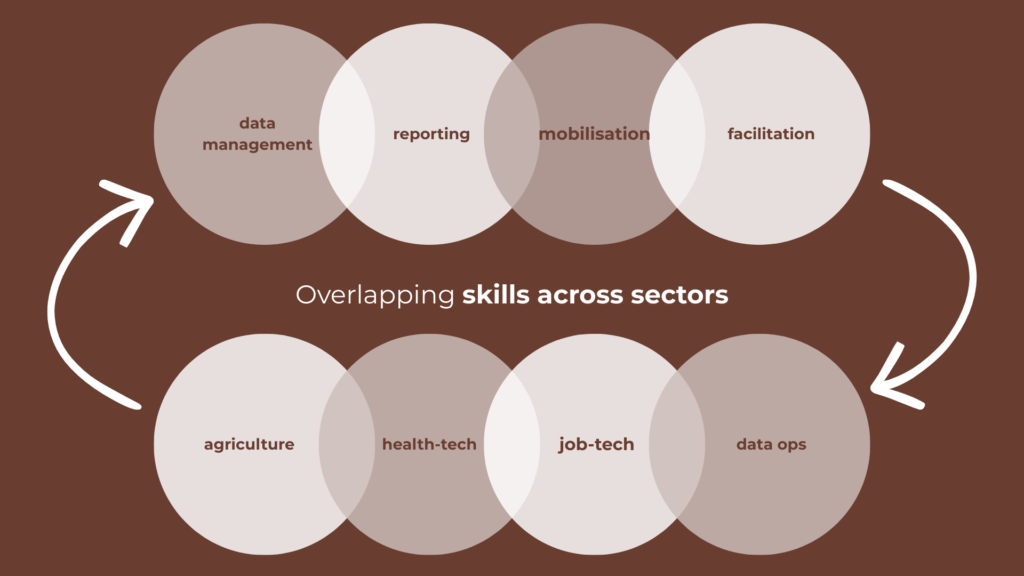
Another important insight emerging from this phase is the fragmentation of skills across organisations and sectors. Women often perform tasks like data collection, coordination, mobilisation, facilitation, etc that are remarkably similar across agriculture, health-tech, jobtech, and data operations. Yet, because each organisation defines these roles differently, the skills appear disconnected rather than transferable.
Recognising overlaps across different sectors offering emerging data and digital services work opens the door for more coherent career pathways, where women can transition from one sector to another without starting over.
This possibility highlights a need for a shared skills language across the ecosystem. A common digital skills framework could standardise terminology, clarify competencies, and help organisations articulate the value of the skills women already possess, turning fragmented roles into fluid career ladders.
The weight of perception: Client hesitation and bias
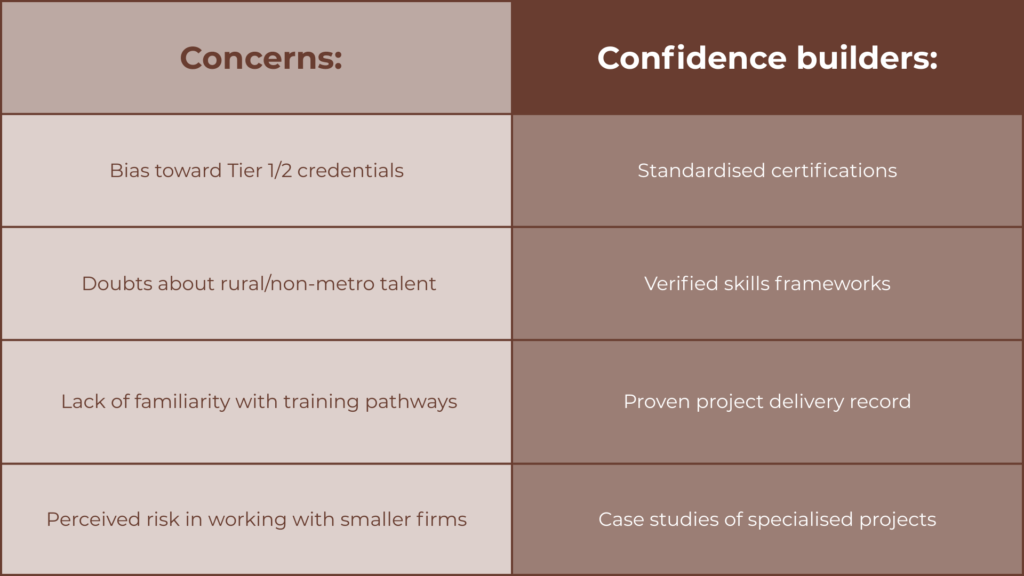
Even in cases where workers are fully prepared and capable, organisations often face client hesitation rooted in preconceived notions about education, geography, or organisational size. Clients may hesitate to hire women from Tier 3 colleges or prefer larger, more established players over smaller or rural organisations, even when the latter offer comparable or superior output.
Industry experts note that this perception barrier persists despite evidence that smaller organisations, particularly those specialising in niche areas, are increasingly able to disrupt larger players. What clients ultimately need is confidence, clear, verified signals that the talent being offered is credible and skilled. This points toward the importance of standardised certifications and verification systems. A shared approach to validating skills could reduce friction, build trust, and open the door to more consistent work opportunities for women.
What holds clients back and what builds trust?
Reimagining sales processes and contract negotiations: Industry pivots
Industry experts have also observed a few ways to streamline demand generation by leveraging AI and building demand-smart contracts.
For instance, RfP response efficiency can be improved dramatically (3-4 days) through reusable artifacts and assets for sales processes. These can be built through LLMs by feeding contract knowledge built over many years.
Additionally, companies are also moving toward “skin in the game”, outcome-based contracts. Productivity gain frameworks (PGF) can allow organisations to fulfil 5% contractual commitment with potential 10% actual gain. The client can then take gain-share on the 5% difference, building trust and shared accountability into the contract.
Conclusion: Building a future where demand is as inclusive as supply
While the first blog in this series highlighted what women want from digital work, this second exploration focuses on what organisations must build to deliver those outcomes at scale. Early insights from the Digital Naukri Challenge underscore a critical truth: women’s digital livelihoods are only as stable as the demand structures behind them. For these pathways to endure, demand must be diversified, anchored in strong partnerships, and supported by common skill frameworks that enable recognition across sectors and give clients credible signals of talent quality.
Equally important is how demand is translated into work. Lengthy sales cycles, fragmented contracting, and short-term pilots create uncertainty that undermines income stability for women. Streamlined sales processes, clearer scopes, faster onboarding, and longer-term or repeat contracts are essential to making digital work reliable rather than episodic.
If organisations can collectively strengthen demand through CSR partnerships, specialised talent pools, shared skill frameworks, credible quality signals, and more predictable contracting models, digital work can move from a short-term opportunity to long-term empowerment. Women are ready for this future. The ecosystem must now rise to meet them.