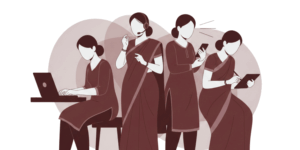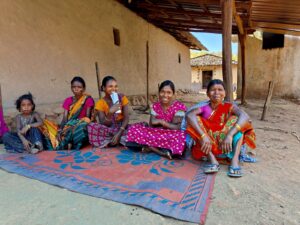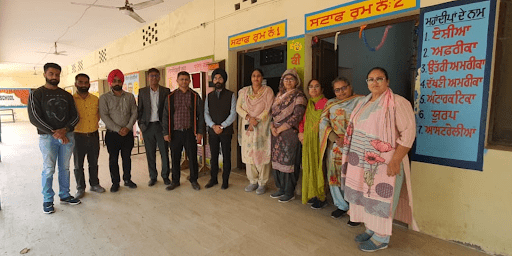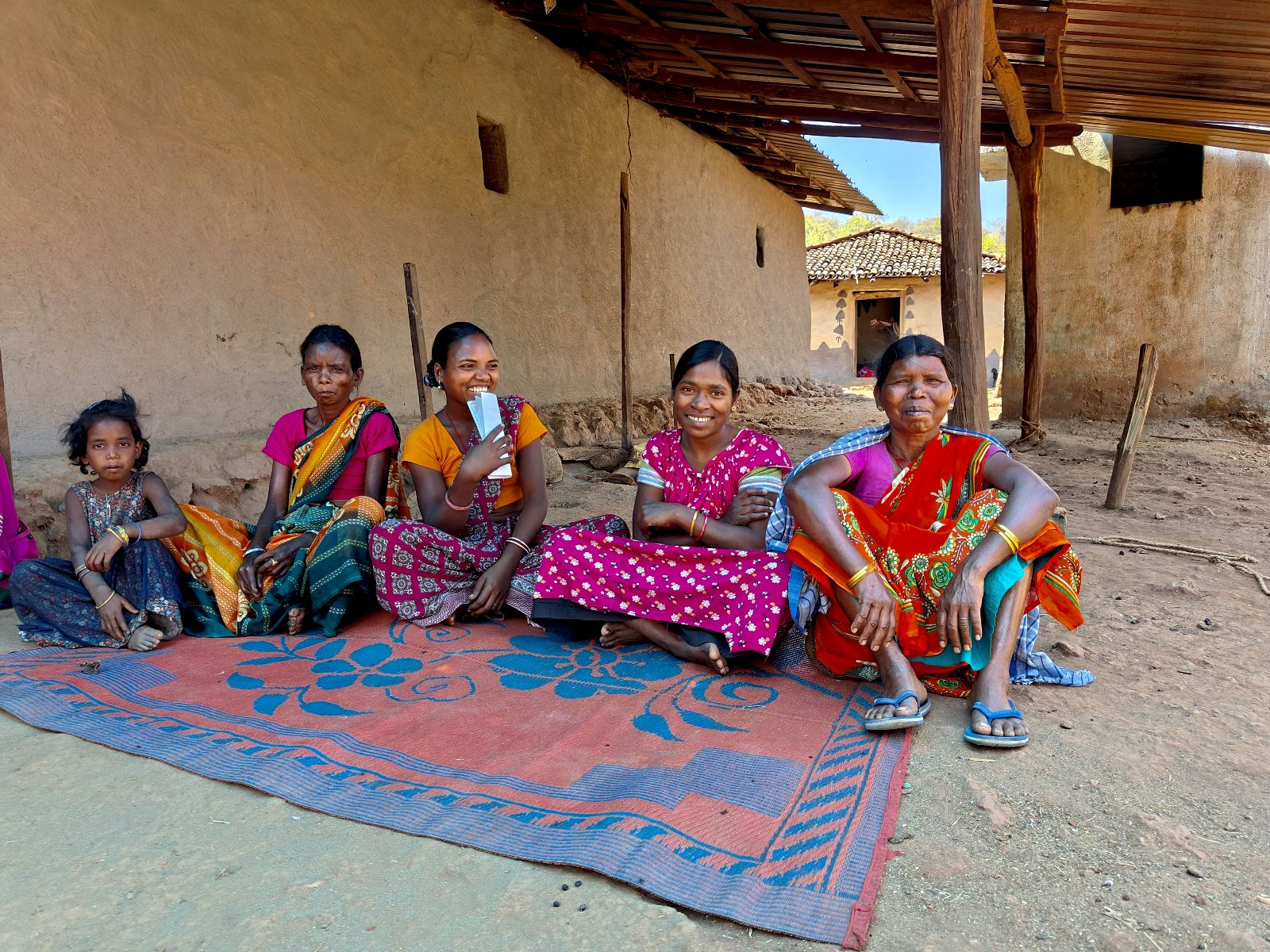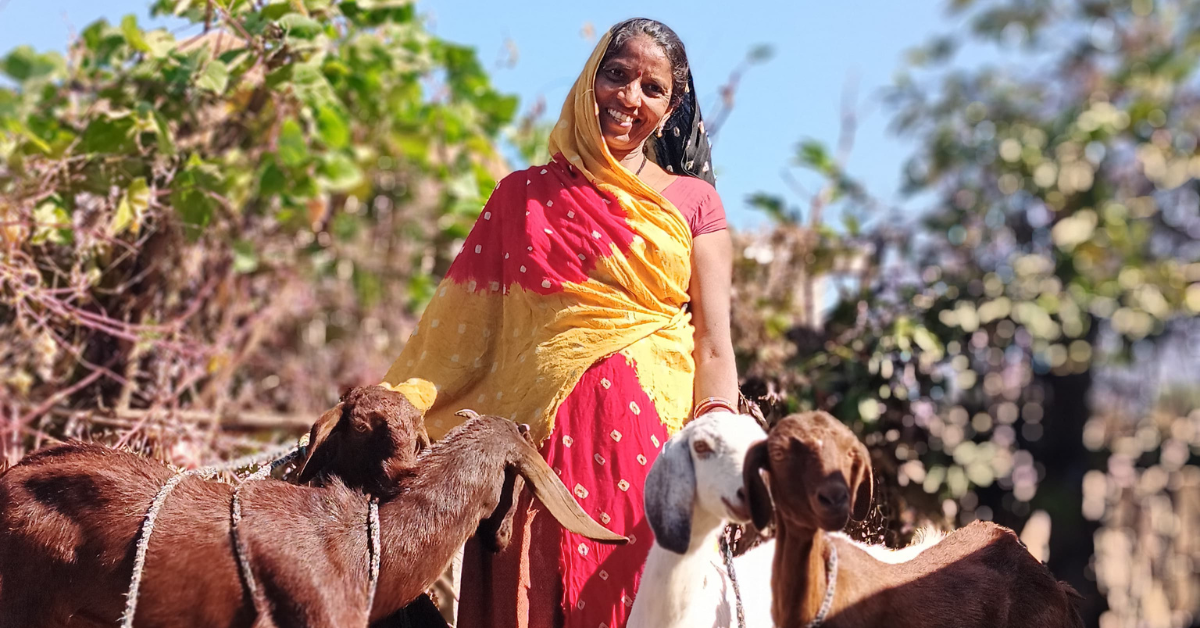

Across India, millions of women stand at the edge of opportunity, eager to work, eager to contribute, and eager to carve out a measure of independence. Yet, the path to earning has often felt narrow, demanding that they conform to rigid work structures that leave little space for the everyday realities they navigate. Caregiving, safety, mobility, household routines, and longstanding social expectations form the backdrop against which every decision about work is made.
It is within this landscape that the incentive-based grand challenge Digital Naukri Challenge (DNC) was created, inviting organisations across sectors, from BPO and content services to AI & data services, rural healthcare support, and agritech, to design livelihood models that women can genuinely access and sustain. As the challenge progressed, a rich tapestry of insights emerged, revealing the quiet, determined ways in which women shape their work choices and reshape their own possibilities.
What stood out most, cutting across geography, income level, education, and age, was a simple truth: women participate, progress, and persist when work aligns with their lived realities.
These early learnings reveal three essential elements that women look for as they step into the digital workforce: flexibility, predictable income, and a work environment that treats them with dignity.
1. Flexibility: The foundation of participation
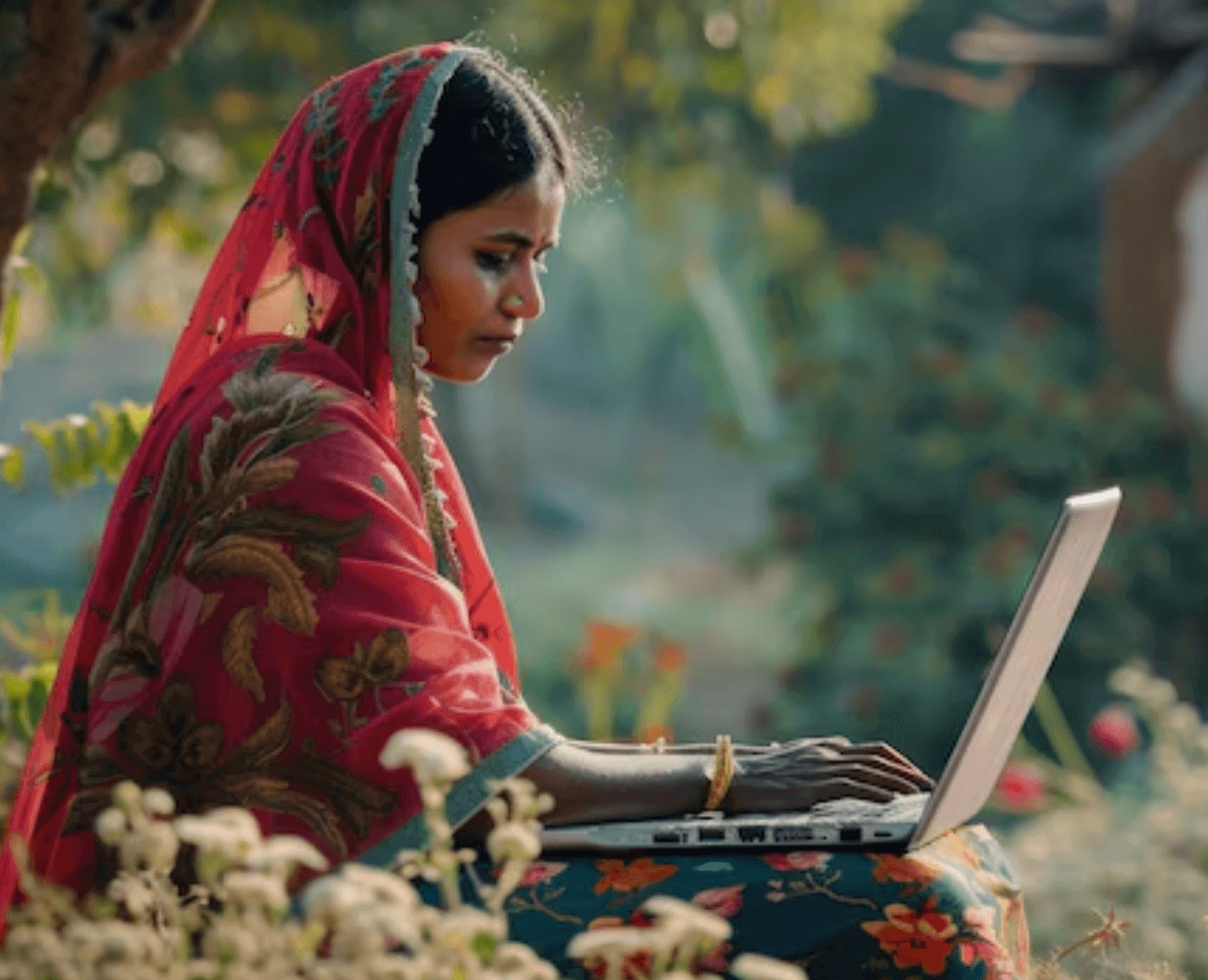
For many women engaged in digital work enabled by DNC challengers, the idea of work is inseparable from the negotiation required to fit it into a day already filled with caregiving, household responsibilities, and community expectations. Flexibility becomes more than a preference, it becomes the enabling condition that determines whether work can happen at all.
Women shared repeatedly that they value opportunities where the structure of the role adapts to the rhythm of their lives. They seek schedules that accommodate caregiving for children or elders, tasks that do not require long or unsafe commutes, and work that can be done within or near the home. When organisations design such models, participation expands naturally and meaningfully.
These insights come alive when seen through actual participation patterns. The data shared below illustrates the everyday realities of women in digital work—their hours, their consistency, and the vital role of proximity and safety in shaping their choices.
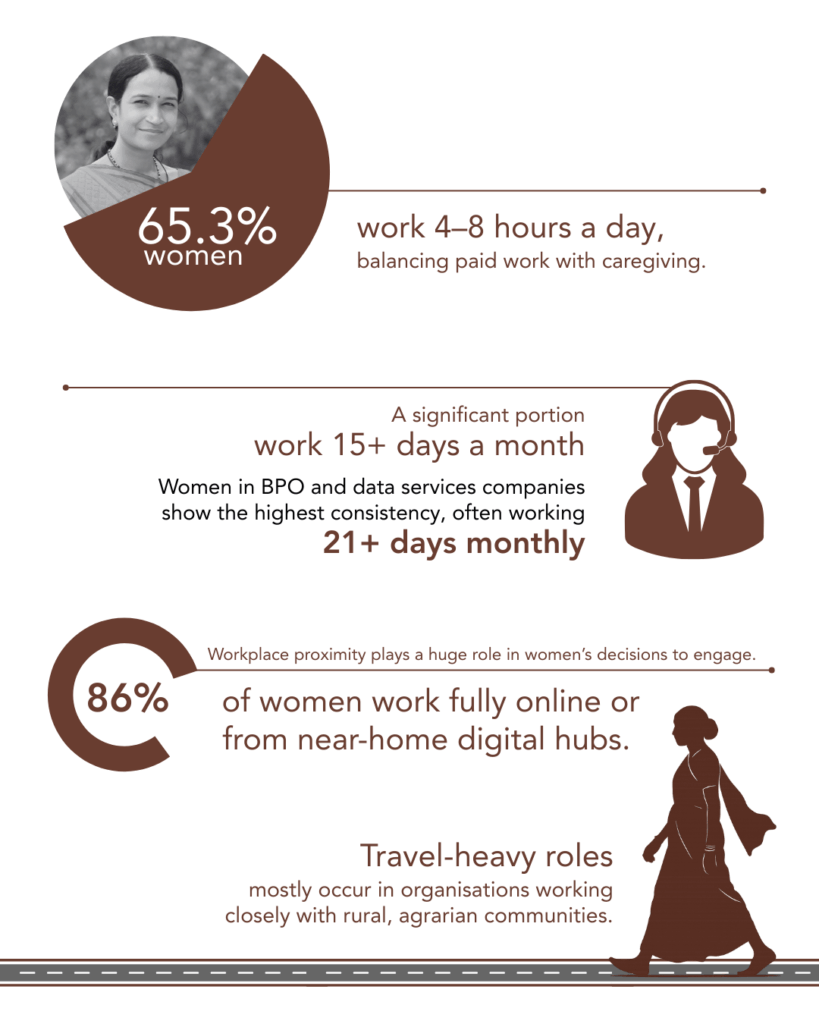
One founder at a rural digital skilling + job tech company described a moment of realisation during their recruitment efforts in rural India:
“Less than 5% of rural factory job seekers were women. That’s when we shifted to phone-based digital work—flexible, remote, and doable from home.”
This shift in approach did more than increase numbers; it created genuine access for women who had long seen formal work as out of reach. A woman working with a data services company shared how this change affected her life:
“With mobile-based work, I could stay with my kids and still earn. I even started a spice business. My income now supports my children’s education.”
Stories like hers illustrate how flexibility does not simply open doors to employment; it expands women’s sense of what they can aspire to, blending the familiar responsibilities of home with the new possibility of financial independence.
Insight: Flexibility is not a perk. It is the gateway that allows women, especially first-time earners, to consider work at all.
2. Income: Reliability over high earnings
Women’s relationship with earnings is often shaped by responsibility, towards their families, their children’s aspirations, and their own long-delayed ambitions. While higher incomes are appreciated, what they emphasised most was the need for reliability.
Predictability allows them to plan. It allows them to make decisions with a sense of security rather than hesitation. It gives them space to think beyond immediate expenses and consider longer-term goals such as savings, education, or repayment of loans.
Earning patterns across digital work
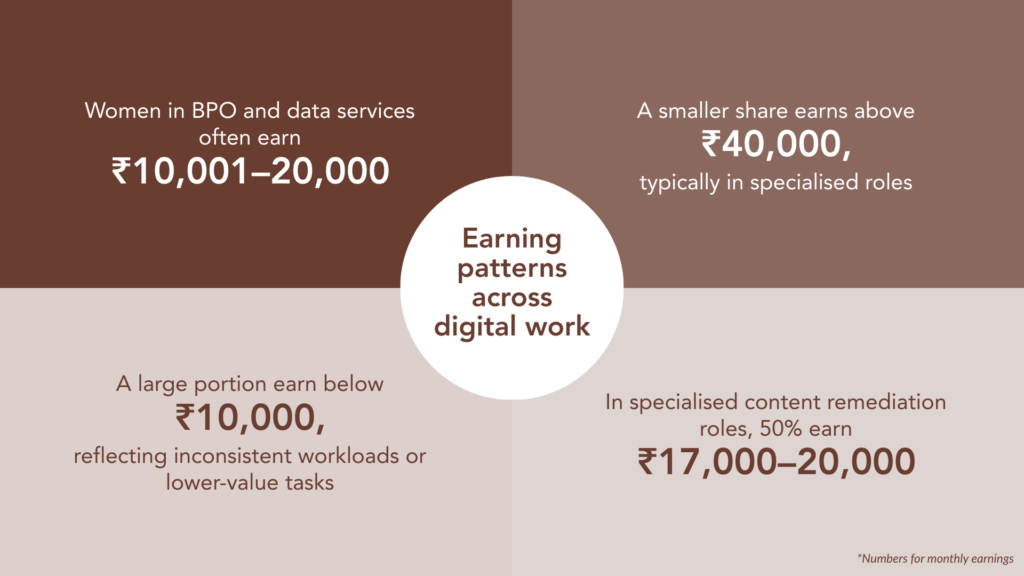
Across digital work enabled by DNC Challengers, earning patterns demonstrate how income strengthens women’s financial voice. Women who progress to advanced digital skills like coding, quality assurance, specialised data processes, medical scribing, or content moderation are able to reach higher income brackets, often above ₹40,000 in outcome-driven roles. Yet even women in entry-level roles express deep appreciation for knowing that their time and effort consistently translate into income they can rely on.
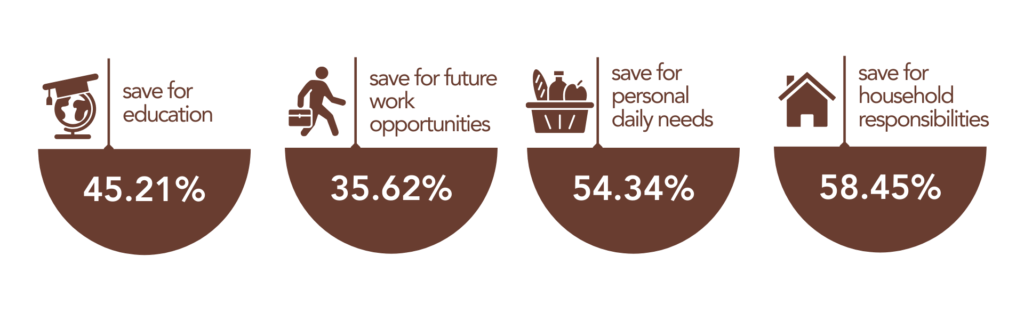
How women use their earnings:
How women use their income reveals an equally powerful narrative. Their savings flow toward household needs, children’s education, EMIs, healthcare, and small entrepreneurial pursuits, often serving several priorities at the same time. These patterns show that immediate needs and long-term goals frequently overlap as women balance present responsibilities with future ambitions.
One woman described the pride she felt in being able to contribute consistently:
“This job gave me financial stability and the confidence of contributing to my family.”
— Worker at a content remediation company
Another spoke about the sense of accomplishment in managing household responsibilities while retaining the ability to meet financial commitments:
“Working from home while paying our house EMI gives me immense pride.”
— Worker at a BPO Services Company
These voices highlight how predictable income does more than improve household finances; it strengthens women’s agency, reshapes family dynamics, and lays the groundwork for long-term career growth.
3. Work conditions: What makes women stay?
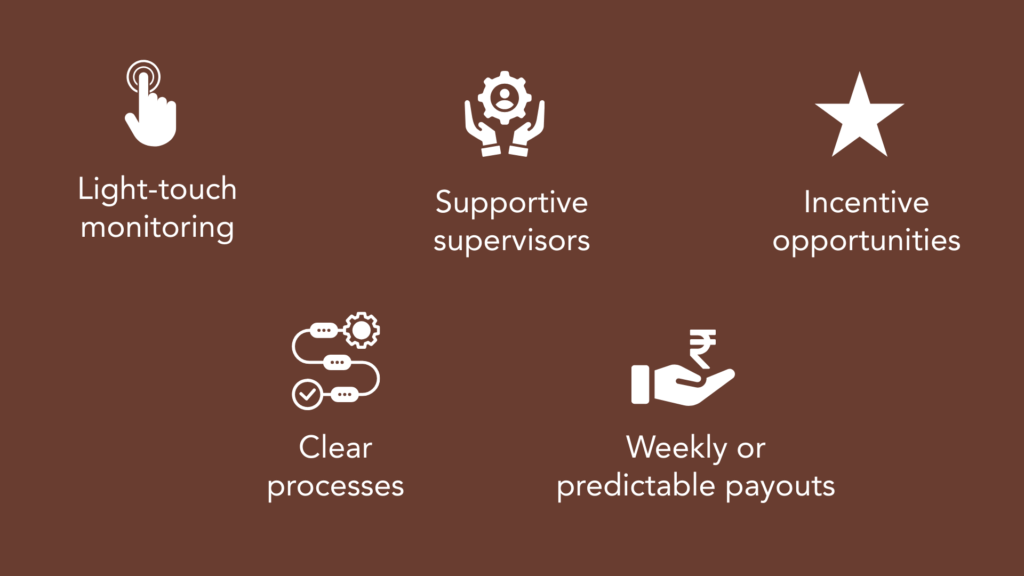
Once women enter the digital workforce, their decision to stay is strongly influenced by the conditions under which they work. Timely pay, fair work allocation, clear expectations, supportive managers, and a respectful culture shape their experience far more deeply than perks or incentives ever could.
Top reasons for continued engagement
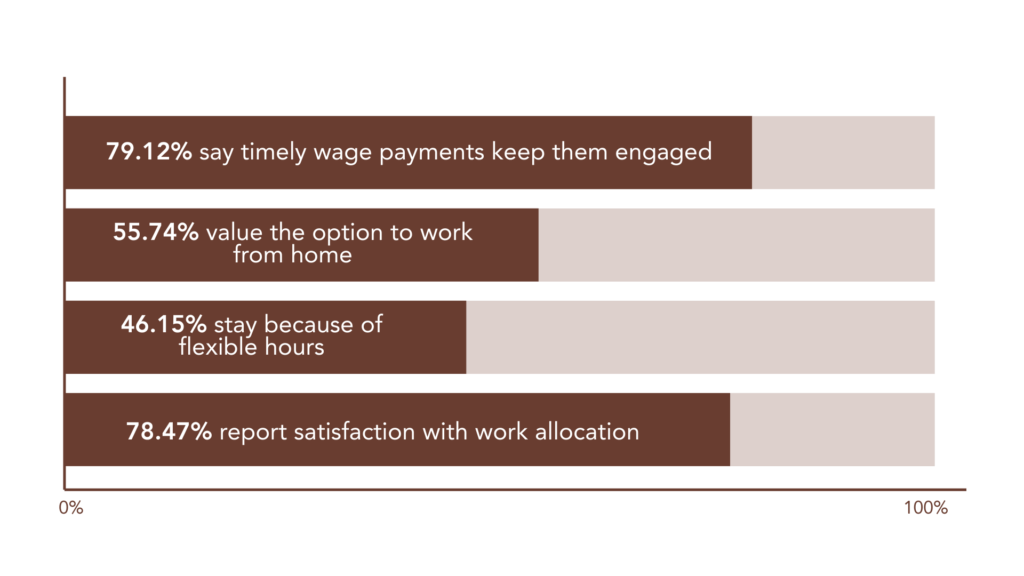
Across the challenge, participants repeatedly shared that they value workplaces where communication remains respectful, mistakes are treated as part of the learning process, and supervisors recognise the realities they navigate every day. They also emphasised the importance of transparent performance expectations, empathetic problem-solving, and an environment that actively prioritises safety and well-being.
Women repeatedly raised the importance of:
The founder of a digital livelihoods organisation reflected that an RCT conducted with 5,500 women participants in 2022 on their hybrid work model revealed significant shifts, with 93% of women gaining greater income control and households experiencing a 60% rise in earnings. These results helped the organisation identify which accommodations were most crucial to prioritise while tailoring their model to women’s needs.
Another team lead described a simple yet powerful decision that strengthened retention:
“We pay weekly and avoid micromanagement. That’s why women stay.”
— Team Lead at a BPO Services company
These insights underline a crucial point: a respectful workplace creates continuity. When women feel seen, valued, and supported, they invest emotionally and professionally in the work, building both skills and tenure.
Women have spoken. Will work finally evolve?
The early learnings from the Digital Naukri Challenge reveal a clear direction for the future of women’s work in India. When work adapts to the rhythm of women’s lives, participation rises naturally; when income is predictable, confidence strengthens; and when dignity is embedded in everyday interactions, women stay and grow within the workforce.
Digital work has widened access for many women who were previously held back by mobility restrictions, social norms, and rigid job structures. Through work models enabled by DNC challengers, women are now earning on terms that suit their realities, building meaningful skills, contributing steadily to their households, and pursuing aspirations that once felt out of reach.
As India moves toward a more digital and interconnected economy, the responsibility rests with employers, platforms, and policymakers to move beyond intent and create work models that honour the realities women navigate. The measure of progress will lie in how consistently organisations translate understanding into action by shaping environments where women can grow without being asked to compromise their safety, their time, or their aspirations.
Women are stepping forward with clarity and determination, ready to shape their economic futures. What remains is for us to build the systems that can meet their momentum—systems that expand opportunity, nurture ambition, and lay the groundwork for a more equitable and thriving workforce for years to come.
Women are stepping forward with clarity and determination, ready to shape their economic futures. What remains is for us to build the systems that can meet their momentum, expand opportunity, nurture ambition, and lay the groundwork for a more equitable and thriving workforce for years to come.