After two decades in finance, business development, and leadership roles. And after boardrooms, balance sheets, and business targets, I had quietly started asking myself a different question. Which wasn’t, what have I achieved? But what have I contributed?
That question brought me to the Indian Administrative Fellowship. And to Jharkhand, a state I had grown up in, started my career, and somehow never truly understood until I worked inside the system that governed it.
The assumption I walked in with
Twenty years in the private sector will give you confidence. Sometimes, too much of it.
I arrived expecting that a well-structured idea, backed by corporate logic and clear data, would be embraced and implemented. That the system would respond to good thinking the way a business does: quickly, decisively, efficiently.
What I found instead was something more humbling and ultimately, far more interesting. The government, I learned, is like an elephant. Massive. Powerful. And it moves at its own pace.
The fellowship didn’t teach me to fight that. It taught me something more valuable: you don’t make an elephant dance. You understand where it wants to go, and you help it get there faster. Real change isn’t one quick win. It’s the patience to keep nudging in the right direction, consistently, until the movement becomes momentum.
What the system actually taught me
Here’s what most outsiders get wrong about the government: they mistake caution for inertia. When I encountered resistance to new processes, my first instinct, the corporate instinct, was to push harder. Present a stronger case. Escalate. Instead, I made a different choice. From the initial struggle to finding a landing place within the Industries Department to managing the Finance portfolio during a leadership gap, I told the team, “Let me try once. If I fail, I will own that failure. But I won’t accept that something is impossible until I’ve actually tested it.“
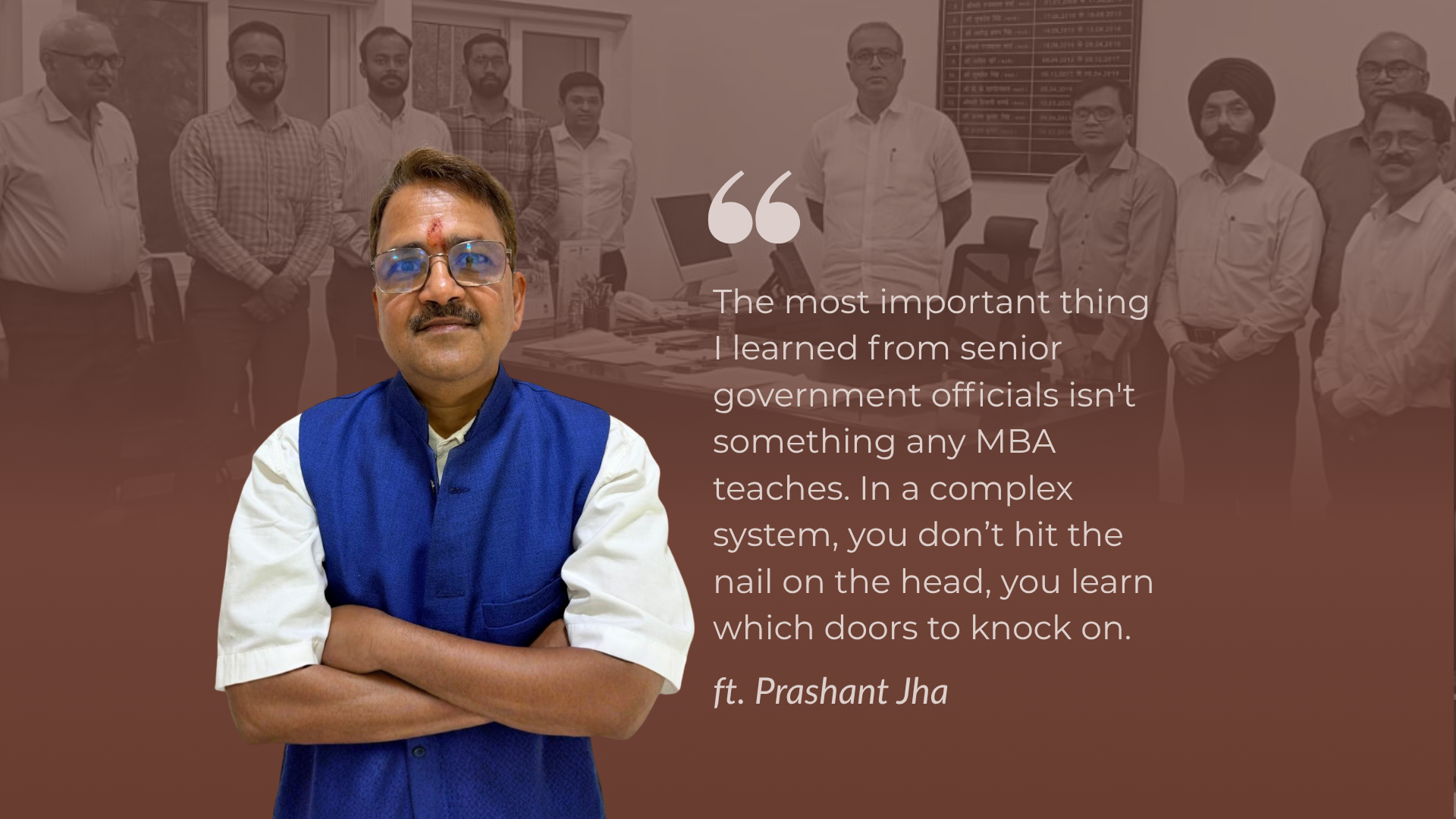
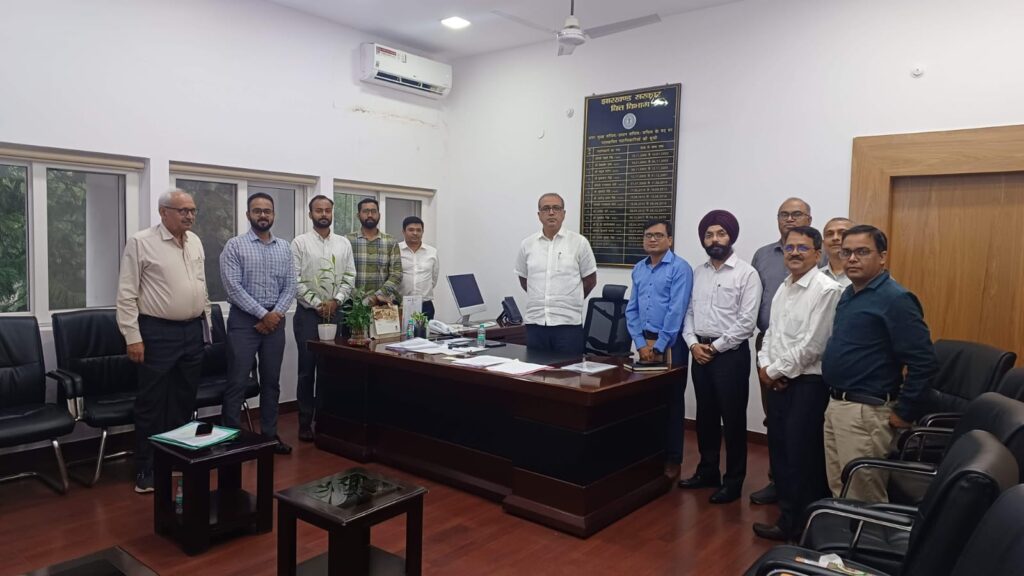
That shift from an external consultant to an internal stakeholder, from critic to co-owner, changed everything. The most important thing I learned from senior government officials isn’t something any MBA teaches. It’s this: in a complex system, you don’t hit the nail on the head. You learn which doors to knock on.

Change in government doesn’t come from applying external pressure. It comes from understanding the system’s own logic: its risks, its incentives, its legitimate caution, and designing solutions that work within that logic, not against it.
Translating corporate thinking into government reality
The e-Pension Calculation Engine
Manual errors in pension processing were impacting people every day, retired government employees waiting for the dues they had earned over a lifetime of service. The technical fix was automation. But I quickly learned that automation alone wouldn’t get institutional buy-in.
The reframe that worked wasn’t efficient; it was safe. By positioning the automated calculation engine as a risk-mitigation tool, a safeguard against audit failures, litigation exposure, and the very real reputational risk of getting a retiree’s numbers wrong. I gave officials a reason to champion the change rather than resist it.
When the system becomes invisible and seamless, that’s when the human impact is fully achieved. A pensioner receiving the right amount, on time, without chasing paperwork, that’s the metric that actually matters.
The AI Policy Bot for Industrial Policy
Jharkhand’s industrial policies are detailed, complex, and often inaccessible to the entrepreneurs and investors they’re designed to attract. I conducted deep-dive comparisons of Jharkhand’s policies against Bihar, Odisha, and West Bengal, and the competitive gaps were clear.
The Policy Bot was built to close those gaps from the citizen’s end: instant, accurate answers to complex policy queries, removing the need to navigate departmental silos. Success wasn’t measured in downloads or usage metrics. It came down to something simpler: could an entrepreneur get a clear answer without navigating layers of bureaucracy? When the answer was yes, that’s when real progress was made.
What I discovered about myself as a leader
This fellowship fundamentally reordered my understanding of leadership.
In the corporate world, I led through direction and clarity, setting the course, aligning teams, and driving execution. In government, I learned to lead through influence, finding the people within the system who want change, understanding their constraints, and equipping them with the tools and backing to move forward.

These internal champions exist in every department. They carry deep institutional knowledge, and it was an enriching experience for me to work alongside them. Patience, I learned, is not the opposite of action. In a public system, patience is often the fastest way to achieve your goal.
A note to the next generation
If you are a seasoned professional in finance, technology, or strategy, considering a role at the intersection of business and governance, here is what I’d tell you: Don’t let the pay scale be the conversation-stopper.
The impact ecosystem runs on a different kind of currency. When a line of code helps a pensioner receive their dues on time, or enables an entrepreneur in a remote district to get a clear policy answer in seconds, it creates a sense of pride that no corporate bonus can match.
Come ready to roll up your sleeves. Seek out the work instead of waiting for it to find you. Find your champions within the system. And keep in mind, the scale here is different; a single well-designed process can touch millions of lives in ways the private sector rarely can.
The corporate boardroom and the government secretariat may operate worlds apart, but the goal remains the same: getting the right things done, under pressure, for people who are counting on you. Eighteen months in Jharkhand was a powerful reminder of why that matters.